China Holds Lending Rates Steady as Stronger Growth Gives Policymakers More Time
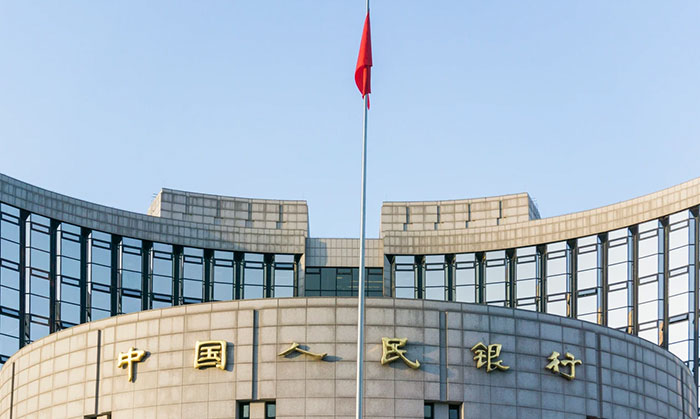
China Holds Lending Rates Steady as Stronger Growth Gives Policymakers More Time
China left its benchmark lending rates unchanged for an eleventh straight month, signaling that policymakers see little urgency to ease further while growth remains resilient and inflation pressures have become less one-sided. The decision reflects a more complicated backdrop than earlier in the year: domestic activity has improved, factory prices have turned positive, but rising geopolitical risk in the Middle East is clouding the external outlook and adding a fresh energy-cost threat.
The People’s Bank of China kept the one-year loan prime rate at 3.0% and the five-year rate, which serves as the main reference point for mortgage pricing, at 3.5%. The move was widely expected, but it still carries an important policy message. Beijing appears to believe it has room to wait, assess incoming data, and avoid deploying additional stimulus too quickly.
That stance has been supported by a better-than-expected start to the year. China’s economy grew 5% in the first quarter, up from 4.5% in the previous quarter and near the top end of the government’s full-year growth range. At the same time, some of the deflationary pressure that weighed on policy thinking through much of the past year has begun to ease.
Inflation has become less one-directional
One reason the central bank can afford patience is that price signals are no longer pointing only downward. China’s factory-gate prices rose in March for the first time in more than three years, increasing 0.5% from a year earlier. That shift suggests higher input costs, particularly energy-related ones, are beginning to filter into the industrial economy.
Consumer inflation has also risen from the low levels seen previously, though it remains moderate overall. After rising 1.3% in February, consumer prices eased to 1.0% in March. That still leaves inflation below the level that would normally constrain monetary policy more forcefully, but it reduces the immediate need for broad-based rate support, especially if officials worry that imported cost pressure may intensify.
For policymakers, this creates a more delicate balance. Weak inflation had previously made the case for easing relatively straightforward. Now, prices are not surging, but they are no longer falling across the board either. That gives the central bank a reason to preserve flexibility rather than rush into another rate cut.
Middle East risk complicates the policy outlook
The external picture is less comfortable. Rising tensions in the Middle East have driven global oil prices higher, increasing the risk that energy costs begin to weigh more heavily on growth, margins, and consumer sentiment across large importing economies, including China.
That matters because an oil shock is different from domestically generated inflation. It pushes up costs without necessarily improving demand. For China, this means policymakers may have to navigate a tougher mix: stronger input prices, more uncertainty in global trade and investment conditions, and still-fragile domestic consumption.
Officials have indicated they are closely monitoring these external risks. The current approach looks less like confidence that the economy is fully out of danger and more like a preference to avoid moving too early before the effects of geopolitical disruption become clearer.
Why the central bank is waiting
Holding rates steady does not mean Beijing is turning restrictive. The central bank has already said it intends to keep policy supportive and moderately loose this year. But the latest decision suggests that support may come in a measured, conditional way rather than through immediate rate cuts.
There are several reasons for this caution.
First, growth has improved enough to lower the pressure for emergency action. A first-quarter expansion rate of 5% gives policymakers some breathing room.
Second, inflation is no longer uniformly soft. With factory prices rising and consumer inflation no longer near zero, the central bank has less cover for aggressive easing.
Third, policymakers likely want more time to judge how the energy shock develops. If geopolitical tensions ease, the case for holding steady may look sensible. If oil prices remain elevated or rise further, the policy response could become more complicated.
Domestic demand is still a policy priority
Even with the pause on rates, Beijing is not stepping away from its broader economic priorities. Officials continue to emphasize the need to expand domestic demand and strengthen consumption, a sign that they do not see the current growth pace as entirely self-sustaining.
That matters because a healthier first quarter does not necessarily resolve China’s deeper challenge: how to rely less on trade and industrial production and more on household spending. If consumption remains soft, the economy may still need targeted support later in the year, even if benchmark rates stay unchanged in the near term.
The next policy test
For now, China’s rate decision suggests a central bank that sees enough improvement to stay on hold, but not enough clarity to declare the economy out of risk. Policymakers are effectively buying time. They want to see whether stronger growth can persist, whether inflation remains manageable, and whether the Middle East shock proves temporary or more lasting.
The next phase will depend on that combination. If growth holds and inflation edges higher, Beijing may keep rates unchanged for longer. But if external risks begin to drag more visibly on confidence and activity, the case for renewed easing could return quickly.