China’s Gold Buying Surge
China’s Gold Buying Surge
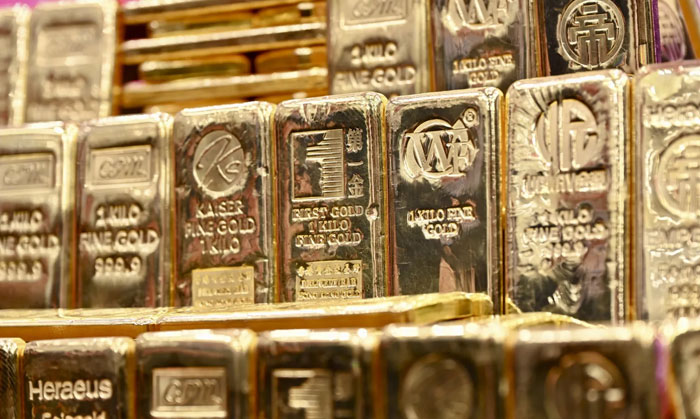
China is buying gold at a record pace, with the central bank extending its longest buying streak in years while households and businesses turn to the metal as an alternative store of value.
The People’s Bank of China added around 23 tonnes of gold in September, its largest monthly purchase in almost three years. The purchase extended the central bank’s buying streak to 23 consecutive months, the longest since at least 2015.
At the same time, China’s imports have reached record levels. The country imported more than 1,000 tonnes of gold worth $158.8 billion during the first eight months of 2026. That already exceeds the 886 tonnes worth $96.5 billion imported during the whole of 2025.
Why China is buying
The buying is being driven by two separate factors.
For the Chinese government, gold provides a way to diversify foreign exchange reserves and reduce reliance on US dollar assets. The freezing of Russia’s central bank reserves following the invasion of Ukraine highlighted the possibility that foreign-held assets can become inaccessible during periods of geopolitical tension.
China has also reduced its holdings of US Treasuries. Its Treasury holdings fell to an 18-year low of $618 billion in July as Beijing continued to diversify its reserves.
Gold held in a country’s own vaults is less exposed to restrictions imposed by another government. This makes the metal particularly attractive as central banks reassess how their reserves are allocated.
The purchases also support China’s efforts to develop a deeper domestic gold market. The central bank has continued building its holdings as it expands its role in the country’s gold market.
Households turn to gold
Chinese consumers are providing another source of demand.
With the property market in a prolonged downturn and household confidence under pressure, gold jewelry, bars and coins have become increasingly attractive. Property has traditionally been one of the main stores of household wealth in China, leaving investors with fewer established alternatives while the sector remains weak.
Equities have also provided limited support. The CSI 300 index is down around 8% this year, while returns from bank deposits and bonds have declined amid weak borrowing demand.
Government bond yields illustrate the difference in returns available to investors. China’s one-year government bond yield has fallen to around 1.2%, compared with approximately 4.46% in the US.
That makes the opportunity cost of holding gold relatively low for Chinese investors, particularly when compared with markets where cash and fixed income offer higher returns.
Gold remains resilient
China has continued buying even as gold prices have pulled back sharply.
Gold fell more than 8% in September to around $4,176 an ounce, after reaching a record above $5,500 in January. Higher US yields have also created pressure on gold because the metal does not generate interest income.
Normally, rising interest rates and bond yields make non-yielding assets such as gold less attractive. Yet Chinese demand has helped provide support even as global financial conditions have become less favorable for the metal.
Central bank purchases are particularly important because they tend to be based on longer-term reserve management rather than short-term price movements. This can provide a more stable source of demand than retail investment.
China ranked fifth globally in official gold holdings, with around 2,387 tonnes as of August, according to the World Gold Council. That remains less than one-third of US holdings.
What could change the outlook
China’s demand is not guaranteed to continue at the current pace.
A recovery in the property market or stronger equity performance could encourage households to move money back into traditional investments. A weaker yuan could also make gold more expensive for Chinese buyers, while higher domestic interest rates could make bank deposits more attractive.
Gold’s longer-term direction will also depend on central bank demand elsewhere. If central banks become less interested in diversifying away from traditional reserve assets, one important source of structural demand could weaken.
For now, however, China remains a significant source of support for the gold market. Government purchases, strong consumer demand and limited domestic investment alternatives are keeping demand elevated even after gold’s recent decline.
The immediate question is whether Chinese demand is being driven mainly by weak domestic investment conditions or reflects a more permanent shift toward gold. If households and the central bank continue accumulating the metal, China could remain an important source of demand even if prices move well beyond the current cycle.