China’s Record Trade Surplus Widens as U.S.-Bound Exports Keep Sliding
China’s Record Trade Surplus Widens as U.S.-Bound Exports Keep Sliding
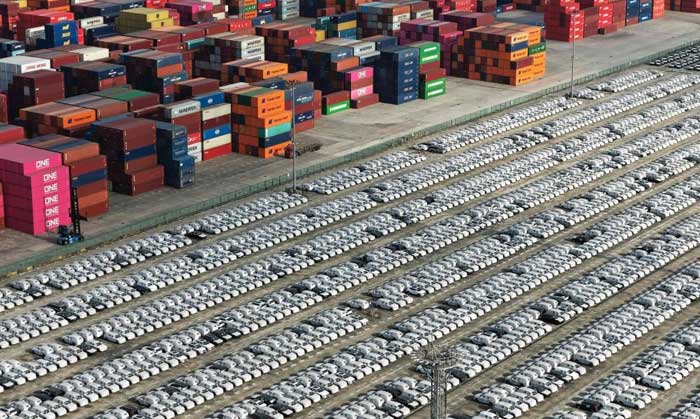
China closed the year with a record trade surplus after a stronger-than-expected jump in December exports, even as trade flows with the United States continued to contract sharply amid lingering tariff frictions and supply-chain shifts.
Official customs data showed exports rose 6.6% year on year in December in U.S. dollar terms, beating market expectations and accelerating from November’s 5.9% growth. Imports also surprised to the upside, increasing 5.7% from a year earlier, the fastest pace in three months, suggesting a modest improvement in inbound demand at the margin.
For the full year, exports grew 5.5% while imports were broadly flat, lifting China’s trade surplus to $1.19 trillion, up about 20% from 2024. The headline surplus underscores how heavily the economy still relies on external demand, even as domestic activity remains uneven.
U.S. trade remains a clear weak spot
Behind the strong December headline, trade with the United States continued to deteriorate. Shipments to the U.S. plunged 30% year on year in December, extending a run of monthly declines, while imports from the U.S. dropped 29%. Across 2025, exports to the United States fell 20% and imports declined 14.6%, signaling a broad pullback in bilateral trade volumes despite periodic signs of de-escalation in policy rhetoric.
Chinese officials reiterated that trade ties should be mutually beneficial and called for dialogue to resolve disputes and expand cooperation. Still, the numbers suggest that firms on both sides have continued to adjust sourcing, production, and shipping strategies in response to tariffs, export controls, and political risk.
Exports rotate to other markets, raising imbalance concerns
As U.S.-bound shipments fell, Chinese exporters continued to redirect growth toward other regions. December exports to the European Union rose 12% year on year, while shipments to Southeast Asian markets increased 11%. The reorientation has helped sustain overall export momentum, but it has also amplified concerns among major trading partners about widening trade imbalances and the risk of new defensive measures.
Some international policymakers have urged China to reduce its reliance on exports and accelerate efforts to lift household consumption. The concern is that an oversized surplus can strain the global trading system, prompting other economies to respond with additional barriers to protect their domestic industries.
On the import side, China’s purchases from the European Union rose 18% in December, while imports from Southeast Asia fell 5%. The uneven pattern highlights how trade dynamics are being shaped not only by demand conditions but also by shifting supply chains, commodity cycles, and product-level policy changes.
Domestic backdrop remains soft despite export strength
The trade data arrive against a domestic backdrop that remains challenged. Deflationary pressures have persisted, the property downturn has continued to weigh on household balance sheets, and labor-market uncertainty has constrained consumer confidence. Consumer inflation remained flat in 2025, missing the official target of around 2%, reinforcing the view that domestic demand is still not strong enough to sustain durable pricing power.
Although some forecasters have nudged up their outlook for 2026 growth, expectations are generally built on assumptions of additional fiscal support, continued export resilience, and improving investment sentiment. At the same time, many analysts expect near-term macro policy settings to remain broadly steady, arguing that strong exports have helped offset weak domestic demand and that external tensions have eased from their earlier peak.
Commodity flows: soybeans and rare earths
The customs report also highlighted notable movements in key commodity categories. China’s soybean imports totaled 111.8 million tons over the year, up 6.5% from 2024. In December, however, soybean imports rose only 1.3% year on year to 8 million tons, indicating that month-to-month momentum was more muted even as annual volumes increased.
Exports of rare earths rose 32% in December to 4,392 tons. For the full year, rare earth shipments increased 12.9% from the previous year, reflecting steady external demand for critical minerals used across advanced manufacturing and high-tech supply chains.
What comes next
China is set to release full-year and fourth-quarter GDP figures soon. Market expectations center on fourth-quarter growth in the mid-4% range, while the official annual growth objective is around 5%. The latest trade numbers reinforce the balancing act facing policymakers: exports are providing substantial support to growth, but the scale of the surplus and the continued contraction in U.S.-China trade highlight structural vulnerabilities and potential external pushback.
If domestic demand does not strengthen meaningfully, China may remain dependent on export-led momentum for longer than officials would prefer, underscoring the importance of policy efforts to boost household income confidence, private-sector investment, and a more durable consumption recovery.